
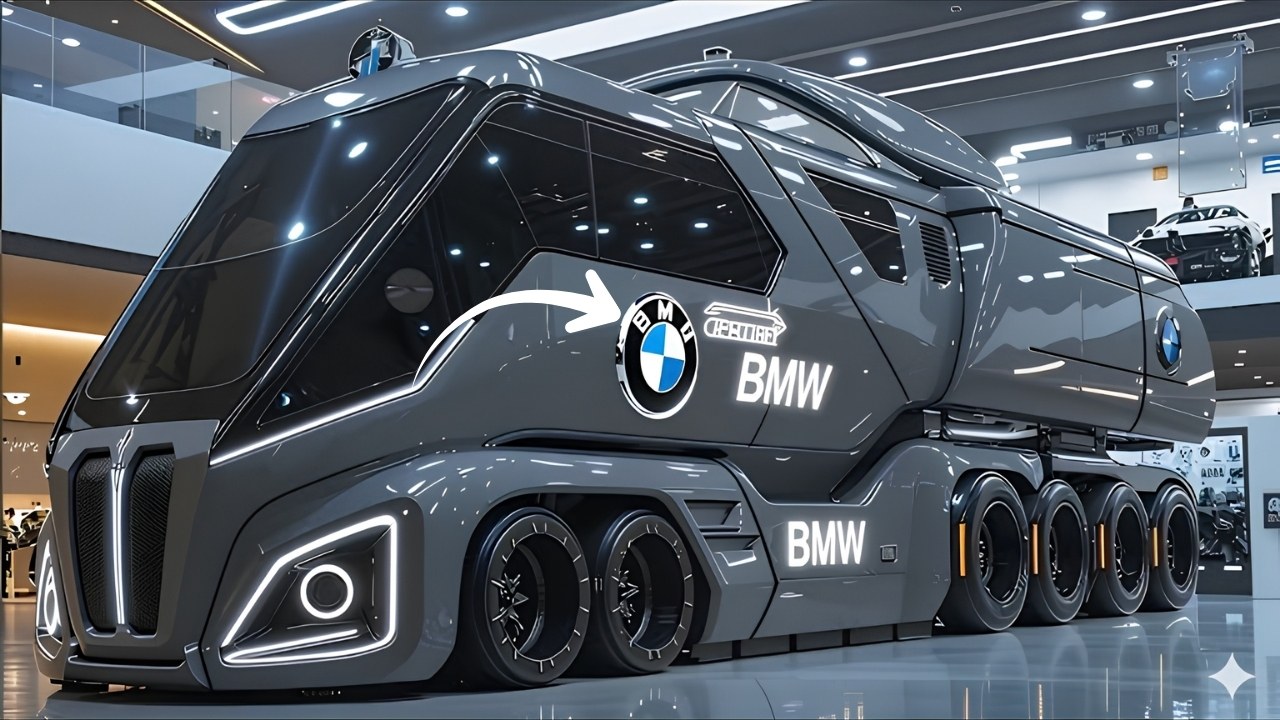
2026 BMW iX Motorhome : The idea of a 2026 BMW iX Motorhome has created plenty of excitement online, especially among U.S. buyers who want an electric RV with luxury-car styling.
The pitch is easy to understand: take BMW’s quiet, high-tech iX electric SUV character, add a spacious living area, and create a premium getaway vehicle for road trips, national parks, and remote work travel.
However, the most important detail is often missing from viral posts and speculative articles: BMW has not officially announced a production BMW iX Motorhome for the United States.
There is no verified BMW USA launch program, dealer order guide, production confirmation, or official motorhome specification sheet for such a model.
Posts describing a two-bedroom iX RV, slide-out rooms, solar-assisted long-distance range, or specific launch timing should therefore be treated as concept-style imagination rather than confirmed BMW product news.
That does not make the idea uninteresting. In fact, it reveals where the electric RV market may be heading. But it is important to separate an appealing vision from a vehicle that is actually scheduled to reach American roads.
What BMW Has Confirmed
BMW’s real 2026 iX is a fully electric luxury Sports Activity Vehicle, not a motorhome. For the U.S. market, BMW introduced three versions: the iX xDrive45, iX xDrive60, and iX M70 xDrive.
The lineup brings stronger performance and improved projected driving range compared with the earlier iX, while retaining the SUV’s upscale cabin, advanced driver-assistance technology, and electric all-wheel-drive character.
The iX xDrive45 produces 402 horsepower and has an estimated EPA-test-procedure range of up to 312 miles. The iX xDrive60 raises output to 536 horsepower and has an expected range of up to 340 miles.
At the top is the iX M70 xDrive, delivering up to 650 horsepower and an estimated 302 miles of range. BMW began production of the refreshed iX in March 2025, with deliveries expected during the second quarter of that year.
These figures explain why the iX became an easy vehicle for online creators to imagine as a luxury camper. It already has a large battery, rapid-charging capability, an unusually quiet driving experience, and a cabin designed around lounge-like comfort.
Yet an SUV capable of moving five passengers comfortably is very different from a self-contained motorhome with beds, a kitchen, water storage, climate control, and enough battery power to support overnight living.
A genuine iX-based RV would require much more than a longer body. It would need substantial structural changes, a different weight balance, more cooling capacity, redesigned suspension, specialized safety testing, and a larger energy system for both propulsion and living amenities.
Why the Concept Feels Plausible
Electric motorhomes are a natural next step for the RV industry. Traditional RVs offer freedom, but they also bring fuel costs, engine noise, exhaust emissions, and frequent maintenance.
An electric alternative could make campsites quieter and could allow owners to power lighting, refrigeration, laptops, air conditioning, and entertainment systems from a high-voltage battery.
BMW’s design language also suits the fantasy. The iX already looks more futuristic than many conventional SUVs, with smooth surfaces, a distinctive front-end treatment, and a cabin that emphasizes screens, premium materials, and open space.
A purpose-built BMW electric motorhome could potentially appeal to well-heeled travelers who do not want the bulky, bus-like appearance of a conventional Class A RV.
Imagine a sleek, long-wheelbase electric touring vehicle with a compact galley, convertible sleeping area, panoramic glass, integrated charging navigation, and a sophisticated energy-management system.
It could work especially well for two people who want weekend escapes without giving up the refinement associated with a luxury automobile.
Still, that remains an illustration of what could be built—not what BMW has formally promised.
The Challenge for Electric RVs
Range is the biggest obstacle. A motorhome is heavier and less aerodynamic than an SUV, especially once it carries passengers, luggage, food, water, camping equipment, and built-in furniture.
Even if it began with iX-like battery technology, the real-world distance between charges would likely fall substantially compared with an electric SUV traveling without a camper body.
Charging would also matter as much as battery size. Public fast-charging stations are usually designed for passenger cars, not long motorhomes towing trailers or occupying multiple spaces.
A practical electric RV would need access to pull-through charging stations, dependable route planning, and battery conditioning that works efficiently in very hot, cold, or mountainous parts of the United States.
The vehicle’s energy use while parked would be another major consideration. A motorhome can consume meaningful electricity overnight through heating, cooling, refrigeration, lighting, cooking equipment, and electronics.
Solar panels may help maintain auxiliary systems, but they would not realistically replace frequent high-power charging for a large luxury EV used on long road trips.
For buyers, the better question is not simply, “How far can it drive?” It is, “How far can it travel while carrying people and supplies, powering the living space, and reliably finding suitable charging?” That is the standard a serious electric motorhome must meet.
2026 BMW iX Motorhome
The timing is especially notable because BMW is moving its American electric strategy toward newer models. Reports in 2026 indicated that U.S. allocation of the BMW iX would conclude after the 2026 model year as BMW prepares to introduce next-generation Neue Klasse electric vehicles, beginning with the iX3.
BMW has said the iX will continue in other markets, but the company is transitioning its U.S. lineup toward its newer EV architecture.caranddriver+1
That makes a near-term, production-ready BMW iX Motorhome for the United States even less certain. If BMW ever enters the electric motorhome category, it may do so through a future dedicated EV platform, a specialist conversion partner, or a separate travel-focused concept rather than by simply transforming the current iX into an RV.
Also Read this – 2026 New Maruti Brezza facelift with vantilated seats and powerful engine, mileage is 28 Kmpl
For now, the 2026 BMW iX Motorhome is best viewed as an intriguing online concept that captures real consumer interest in luxury electric travel.
The official 2026 BMW iX is a legitimate and advanced electric SUV. The motorhome version, though, remains an unverified idea—not a confirmed American BMW model.