
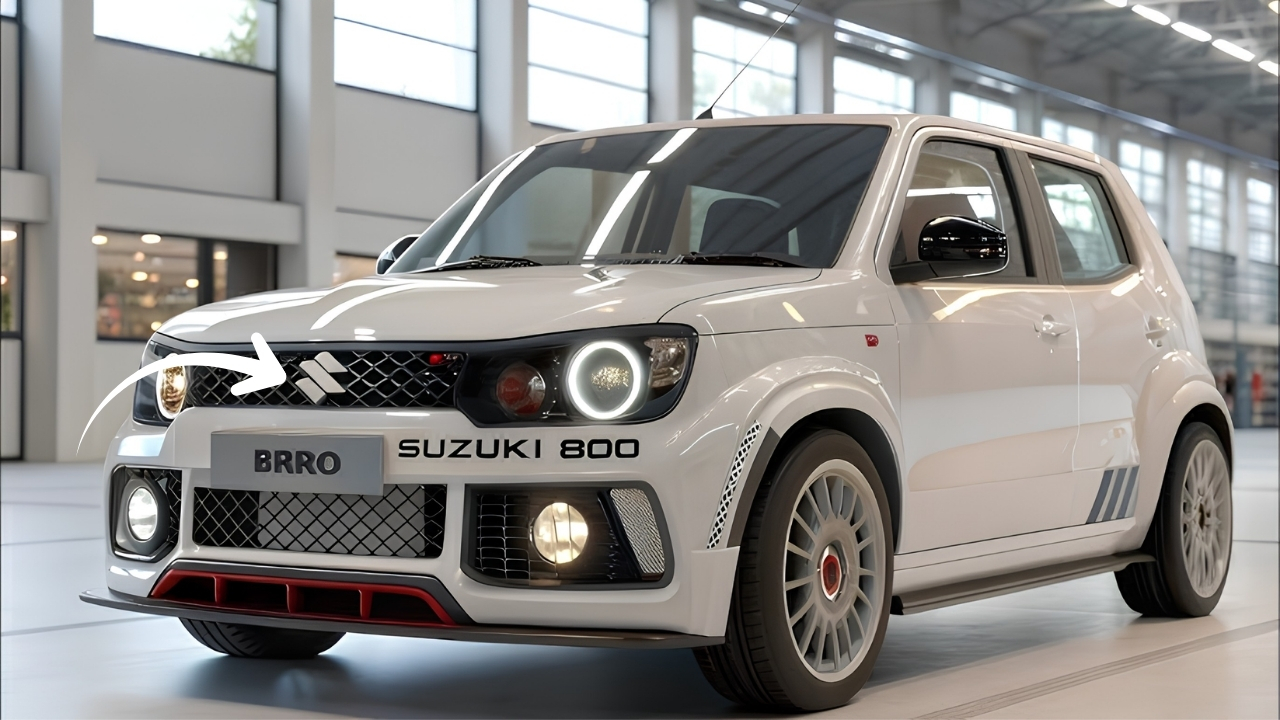
Maruti Alto 800 : For more than two decades, the Maruti Alto 800 was more than just a small hatchback on Indian roads. It was often the first car in a family, the vehicle that helped new drivers gain confidence, and a practical companion for daily commuting.
Its compact footprint, simple mechanical layout and accessible ownership experience made it one of the most recognisable cars in the country.
The Alto name entered India in 2000, and the Alto 800 later carried forward the legacy associated with Maruti Suzuki’s affordable small-car philosophy.
Over the years, the Alto brand recorded cumulative sales of around 44.5 lakh units, reflecting its deep connection with middle-class households, first-time buyers and small-city customers.
However, every long-running automotive story eventually reaches a turning point. Maruti Suzuki stopped production of the Alto 800 in 2023, marking the conclusion of a major chapter in India’s entry-level car market.
The decision was linked largely to stricter BS6 Phase 2 and Real Driving Emissions requirements, which came into effect from April 2023.
Why Maruti Alto 800 Was So Popular
The Alto 800 succeeded because it understood what many Indian buyers needed. It was not designed to be a luxury car or a highway cruiser. Instead, it focused on practical city motoring.
The compact dimensions made it easy to drive through crowded streets, fit into tight parking spaces and handle daily trips to work, school, local markets and railway stations.
For a first-time owner, the car’s straightforward nature was reassuring. The steering was light, visibility was manageable and the manual gearbox was familiar to a wide range of drivers.
Its small size also made it less intimidating for people who were upgrading from a two-wheeler or learning to drive for the first time.
The Alto 800 was powered by a 796cc, three-cylinder petrol engine. In petrol form, it produced about 48PS and 69Nm of torque, paired with a five-speed manual gearbox.
A factory-fitted CNG version was also available, although the output in CNG mode fell to about 41PS and 60Nm.
These figures may look modest beside modern hatchbacks, but performance was never the Alto 800’s main attraction. Its appeal came from predictable urban usability, low running costs and the familiarity of the Maruti Suzuki service network.
The Changing Small-Car Market
The discontinuation of the Alto 800 reflects broader changes in the Indian automobile market. Buyers today expect more equipment, stronger safety packages, connected features, larger cabins and more powerful engines, even in budget-oriented vehicles. At the same time, manufacturers face increasingly demanding regulations related to emissions and safety.
The Alto 800 did receive useful features in its later years, including dual front airbags, rear parking sensors, keyless entry and, in higher variants, a touchscreen infotainment system with Android Auto and Apple CarPlay. Still, meeting newer regulations while preserving the vehicle’s low-cost positioning became difficult.
The 796cc F8D petrol engine was a long-serving unit in Maruti’s small-car range. Reports ahead of the discontinuation indicated that the engine would not continue beyond the end of the 2022–23 financial year because of tighter emissions regulations and weakening demand for very small petrol cars.
This was a significant moment because the end of the Alto 800 also represented the final exit of Maruti Suzuki’s well-known 800cc engine from the Indian market.
The “800” badge had emotional value because of its association with affordable personal mobility and the earlier Maruti 800, a car that played a major role in India’s automotive growth.
Why Production Stopped
The immediate reason behind the Alto 800’s withdrawal was its inability to continue without a BS6 Phase 2-compliant engine. Rather than invest in upgrading the ageing platform and engine for the tougher Real Driving Emissions norms, Maruti Suzuki chose to end production.
Reports described the required upgrade as financially unviable for a car positioned at the lowest end of the market.auto.
This decision also underlined the pressure facing entry-level hatchbacks. When the cost of regulatory compliance rises, manufacturers have two difficult options: absorb the additional cost and reduce profitability, or raise the selling price and risk losing the value advantage that attracted customers in the first place.
For the Alto 800, its defining strength had always been affordability. Adding expensive engineering changes could have altered the very identity of the car.
Instead of turning it into a costlier version of itself, Maruti Suzuki ended the model’s run and shifted attention toward the Alto K10 as its entry-level hatchback.
The Maruti Alto 800 Legacy
The Alto 800 may no longer be produced, but its importance remains visible across India. It can still be spotted in apartment parking areas, small towns, office complexes and narrow residential lanes. Many owners keep the car for years because of its ease of maintenance and practical everyday character.
For countless families, the Alto 800 represented independence. It meant no longer relying entirely on public transport, borrowing a relative’s car or arranging long-distance travel around train schedules. It became part of important personal memories: a family’s first road trip, a child’s school commute, a newly married couple’s first vehicle or an entrepreneur’s first business car.
Also Read this – 2026 BMW iX Motorhome Luxury Smart features, Electric 2 bedroom set house like 8-star hotel
Its story also shows how the Indian buyer has changed. The market is moving toward larger hatchbacks, compact SUVs, automatic transmissions and feature-rich cabins. Yet the demand for sensible, easy-to-own cars has not disappeared. It has simply evolved.
The Maruti Alto 800 will be remembered not for dramatic styling or high-speed performance, but for something more meaningful: it made car ownership possible for millions. Its production may have ended, but its role in India’s motoring history is secure.